Why Good UX/UI Design Is More Than Just “Making Things Look Good?
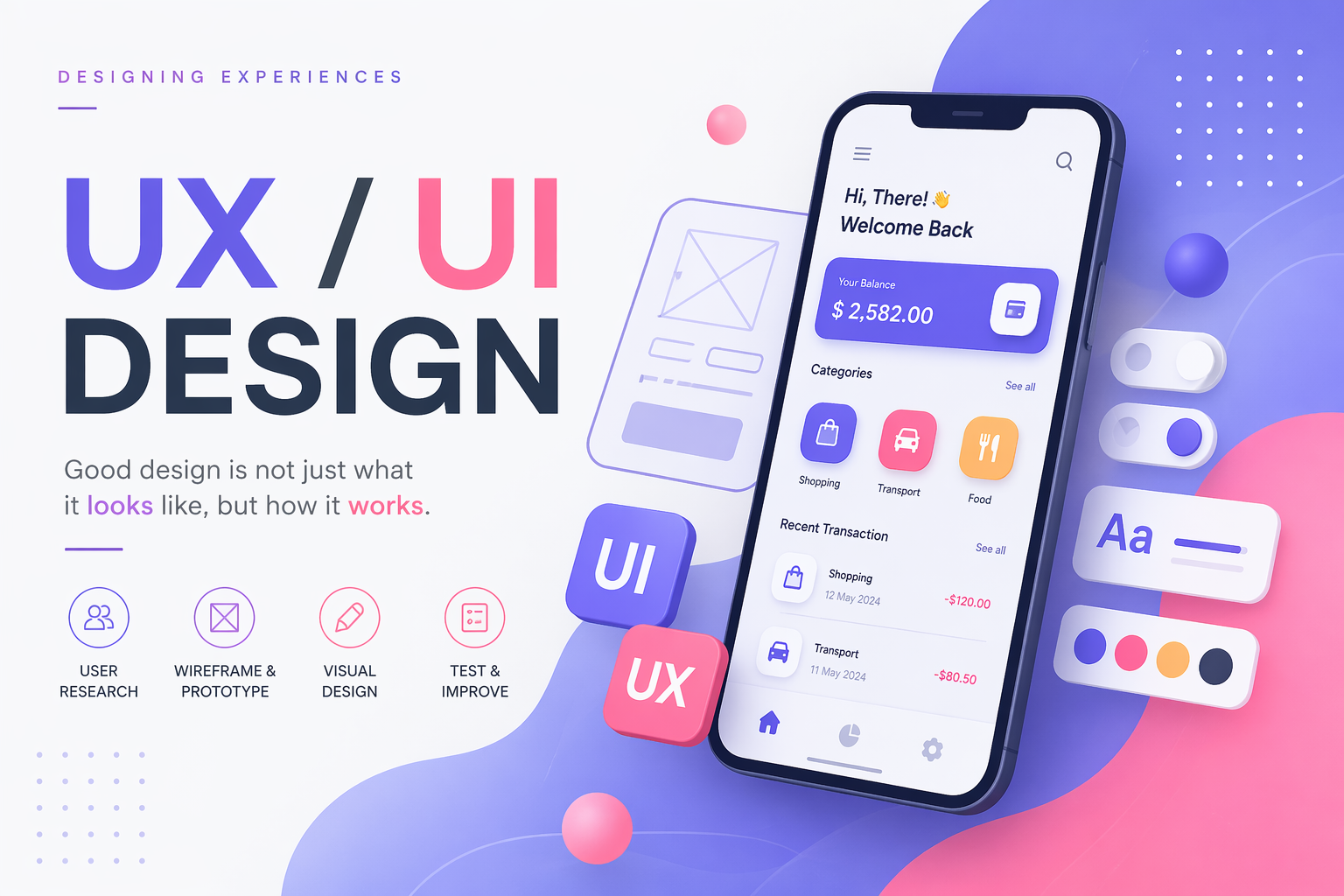
In today’s digital world, users interact with dozens of apps and websites every single day. From ordering food to managing finances, digital products have become part of our daily routine. But have you ever wondered why some apps feel effortless to use while others make you frustrated within seconds?
That difference usually comes down to UX/UI design.
Many people think UX/UI is only about colors, typography, or beautiful screens. While visual design is important, great design goes far deeper than aesthetics. It is about understanding people, solving problems, and creating experiences that feel natural and intuitive.
Understanding the Difference: UX vs UI
Although UX and UI are often mentioned together, they serve different purposes.
UX (User Experience) focuses on how a product works and how users interact with it. It involves research, user journeys, information architecture, and usability testing.
UI (User Interface) focuses on how the product looks and how users visually interact with it—buttons, layouts, typography, spacing, icons, and color systems.
Think of it like this:
- UX is the blueprint of a house
- UI is the interior design
A beautiful interface without good user experience is like a stylish house with confusing rooms and no clear exits.
Why UX/UI Design Matters
Good UX/UI design directly affects how users feel about a product. If a user struggles to complete a simple task, they will likely abandon the product and move to a competitor.
Here are a few reasons why UX/UI design is critical:
1. First Impressions Matter
Users form an opinion about a product in just a few seconds. A clean and well-structured interface builds trust immediately.
2. It Reduces Friction
A well-designed experience removes unnecessary steps and confusion. Users can achieve their goals quickly and easily.
3. It Improves User Retention
When users enjoy using a product, they return. Good design keeps users engaged.
4. It Impacts Business Success
Better user experiences lead to higher conversions, more engagement, and stronger brand loyalty.
The Design Process Behind Great Products
Behind every great product is a thoughtful design process. UX/UI designers typically follow a structured workflow:
1. Research
Understanding the target users, their needs, pain points, and behavior.
2. Wireframing
Creating low-fidelity layouts to structure content and define functionality.
3. Prototyping
Building interactive prototypes to simulate real user interactions.
4. Visual Design
Designing the interface using colors, typography, spacing, and components.
5. Testing
Validating the design with real users and improving it based on feedback.
Design is rarely perfect on the first attempt. Iteration is a key part of the process.
Common Mistakes in UI/UX Design
Even experienced designers sometimes fall into these traps:
- Designing for aesthetics instead of usability
- Ignoring user research
- Overcomplicating interfaces
- Lack of consistency in components
- Too many design elements competing for attention
Good design often means removing things rather than adding more.
A Simple Rule: Design for Humans
At the core of UX/UI design is a simple principle: design for humans, not for screens.
Users do not care about your design system, grids, or component libraries. They care about completing tasks easily and efficiently.
When a design feels effortless, it usually means the designer has done their job well.
Final Thoughts
UX/UI design is not just about making products look attractive—it is about crafting meaningful and efficient experiences. The best designs are often the ones users barely notice, because everything simply works.
As technology continues to evolve, the role of UX/UI designers will only become more important. Designers who focus on empathy, usability, and simplicity will always create products that stand out.
Because in the end, great design is not just seen — it is experienced.